Can an AI assistant coach you with your own health data?
Yes, for training habits and planning when the assistant can read your log. What works, what fails, safety limits, and how to connect your data.
revns editorial · Published November 13, 2026 · 7 min read
AI coaching works best with your own logged data and clear limits. It can plan and explain; it cannot diagnose, treat, or replace a coach you trust in person.
Yes — an AI assistant can coach you on training, sleep and habits when it reads your own logged data, not when it guesses. A useful answer needs your recent sleep, sessions, steps, meals and goals in the tools behind the chat. A 2025 systematic review of digital health coaching in Frontiers in Digital Health found that AI-mediated coaching was often linked to better activity and adherence in the studies it included, but designs varied and none of those trials tested your specific app. Treat the assistant as a planner and explainer, not a doctor, a therapist or a substitute for a coach who watches you move.
TL;DR
| Question | Short answer |
|---|---|
| When does AI coaching work? | When your log is current and the assistant can read trends and goals |
| When does it fail? | Empty logs, vague asks, medical questions, or fine movement technique |
| Built-in vs chat AI | Rule-based briefs need no LLM; chat adds flexibility and needs guardrails |
| Evidence | Digital coaching may nudge activity modestly; long-term proof is thin |
| Safety | Training guidance only; revoke write access you do not trust |
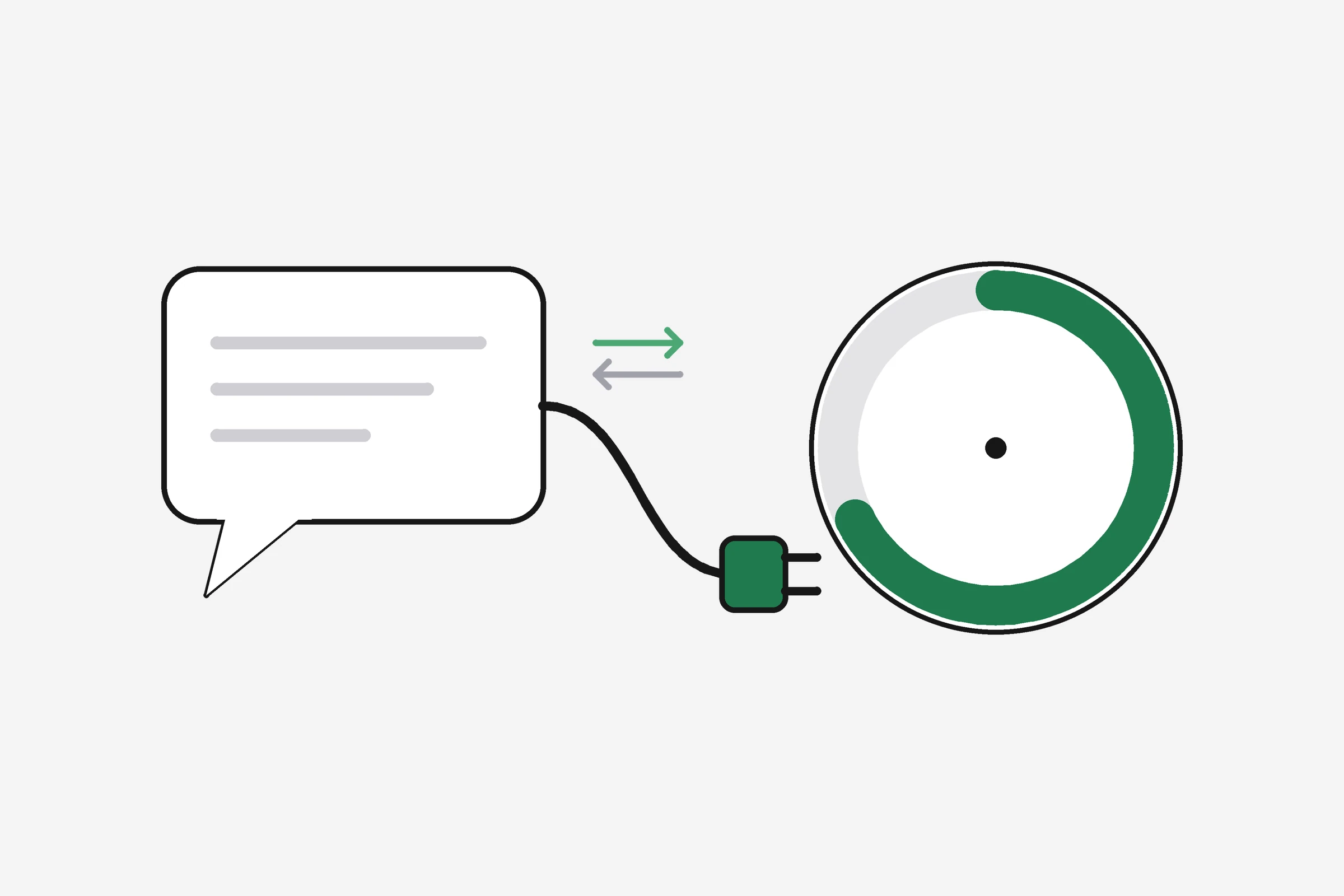
What counts as “coaching” from an AI assistant?
In practice it is one or more of these jobs:
- Read your week — sleep, load, consistency, goals on pace or behind.
- Suggest the next session — lighter after a short night, harder when recovery looks good.
- Explain a concept — zone 2, progressive overload, protein at meals.
- Log for you — turn “40 squats, slept six hours” into stored entries, with your permission.
- Write a plan — seven days with rest, habits and food anchors that fit how you eat.
That is training and lifestyle guidance. It is not diagnosis, prescription, supplement advice, or crisis mental health care. The U.S. FDA’s general wellness policy draws a line: tools meant for healthy lifestyle management are not the same as products that claim to treat disease. An assistant should stay on the lifestyle side.
What does the research actually show?
Evidence is encouraging but modest, and most studies are not about a chat model you open on your phone today.
A 2025 systematic review in Frontiers in Digital Health synthesised 35 studies of human, AI, and hybrid coaching inside digital health programmes. AI coaching was often associated with better activity measures and adherence in those trials, while human-only coaching was mixed. The authors stressed that coaching protocols and engagement metrics differed so much that comparisons were hard. That is a reason to judge your own trend, not a headline score.
A 2025 meta-analysis in npj Digital Medicine pooled 18 randomised trials of standalone digital behaviour-change tools (not necessarily large language models). Pooled effects on physical activity were small but statistically significant (standardised mean difference about 0.32) with low certainty evidence. Benefits looked larger in adults with existing health conditions than in healthy adults. Publication bias and study quality limited confidence.
For monitoring stress, a 2016 systematic review in the British Journal of Sports Medicine reported that simple subjective measures — mood, soreness, fatigue — often tracked training response as well as or better than many objective tests. That matters for AI coaching: if you log mood and energy next to training, the assistant has something research-backed to work with, not only steps.
No peer-reviewed trial proves that a general-purpose chat model, connected to a fitness log last week, improves your health over a year. What we know is: personalised feedback plus accountability helps some people move more; your data makes answers less generic; long-term maintenance is still an open problem for digital tools alone.
Rule-based coaching vs a large language model
Many apps, including revns, already run a rules engine over your data without calling an LLM:
- A morning brief from last night’s sleep, what is due, and which goal is off pace.
- A week plan that spaces hard days, respects cadence, and fits your diet type.
That is coaching in the sense of automated decisions from your numbers. It is deterministic: same data, same brief. It does not improvise prose or invent exercises you never track.
Connecting Claude, ChatGPT, or another assistant through an MCP server adds a language layer on top:
- You ask in plain words; the model chooses tools (read today, log, plan tomorrow).
- It can explain why in paragraphs, not only show a plan card.
- It can also mis-call a tool, misread units, or sound confident when data is missing.
A sound setup uses rules for the plan you rely on every morning and chat for questions and one-off logging, with write permission only when you want it.
What do you need for it to work?
- A honest log — blanks stay blanks; zeros mean “none”. Garbage in still produces confident-sounding garbage out.
- Stable metrics — sleep hours, session effort, steps, on-plan meals, mood if you track it.
- Goals with dates — “run a 10K in June” beats “get fitter”.
- Permissions you understand — read-only for questions; write when you want logging and planning.
On revns, the AI fitness coach brief and week plan use this stack without an AI subscription. The MCP server exposes the same data to external assistants, with OAuth and separate read and write scopes. Automatic sync from Apple Health, Strava or Garmin is on the roadmap, not live today — log in the app, import where available, or speak entries through quick_log.
How do you connect an assistant safely?
Follow the same pattern as any health integration:
- Use OAuth sign-in, not pasted passwords.
- Grant read first; add write after a week of sensible answers.
- Check an audit trail — who wrote each entry and plan item.
- Disconnect from the service side, not only in the chat app.
Step-by-step: Claude, ChatGPT, Claude Code, Cursor. For the protocol itself, see the explainer on what a fitness MCP server is.
What should you ask — and what should you avoid?
Good first questions (data-dependent):
- “Given last night’s sleep, should today be hard, moderate or easy?”
- “Am I on pace for my squat goal? What should change this week?”
- “Plan five training days. I am vegetarian with eggs and work late on Wednesdays.”
- “Log 45 minutes zone 2 cycling and lunch: dal, rice, curd, about 28 g protein.”
Weak questions (generic or unsafe):
- “Fix my knee” — needs examination, not chat.
- “What supplement raises testosterone?” — outside training guidance; see a clinician for labs.
- “I feel hopeless every day” — needs mental health care, not a workout plan.
Use the protein calculator or sleep calculator when you want a number to paste into the chat as context.
How is this different from a wearable’s recovery score?
Wearables compress sleep, HRV and load into one readiness number. That score can help, but one number hides the story. An assistant with MCP can combine sleep trend, last three hard days, goal pace and your logged mood — closer to how a human coach thinks. The limit is still the same: if you never log mood, the model cannot invent it responsibly.
See Whoop vs Oura vs a free tracker for what those scores measure, and what is HRV for why trends beat a single morning.
What to do this week
- Log five days of sleep, training and at least one subjective line (energy 1–5 or “flat / OK / sharp”).
- Read the built-in brief each morning without opening chat — notice when it matches how you feel.
- Connect read-only MCP to your assistant; ask three questions that need your data.
- If answers look sound for seven days, enable write for logging only; review every entry the assistant makes.
- Pick one goal in the app so “on pace” questions have a target date.
When should you see a professional?
See a clinician for chest pain, fainting, injury that swells or will not bear weight, unexplained weight loss, or menstrual changes that worry you. Mental health red flags: low mood or loss of interest most days for more than two weeks, panic that stops normal life, or any thought of self-harm. If you are in crisis, call your local emergency number or crisis line now — in the US, call or text 988; in the UK and Ireland, Samaritans 116 123; in India, KIRAN 1800-599-0019; more countries at findahelpline.com.
An AI assistant does not provide psychotherapy, medication advice, or emergency care.
What are the limits you should expect?
- No form check — it cannot see your squat depth or running gait.
- No medical clearance — it does not know your heart, lungs or medications.
- Hallucination risk — it may cite a study that does not exist unless you ask it to stick to your data and tools.
- Privacy — your chat provider’s data policy applies in addition to the fitness service’s policy.
- Bias toward agreement — models often sound supportive even when you need rest; cross-check with sleep and soreness.
Treat every write action like a trainee coach: trust but verify.
Related
- What is a fitness MCP server?
- How to track mood and energy next to training
- Five numbers worth a weekly health check-in
- Stress, burnout and when to deload
- AI fitness coach and week planner
- The revns MCP server
This is general training guidance, not medical advice.
Sources
- Loughnane C et al. Systematic review exploring human, AI, and hybrid health coaching in digital health interventions. Front Digit Health 2025
- Lee SA, Park JH. Systematic review and meta-analysis of standalone digital behavior change interventions on physical activity. npj Digit Med 2025
- Saw AE, Main LC, Gastin PB. Monitoring the athlete training response: subjective self-reported measures trump commonly used objective measures: a systematic review. Br J Sports Med 2016
- U.S. Food and Drug Administration. General Wellness: Policy for Low Risk Devices (guidance)
Terms in this post
revns publishes training and nutrition guidance, not medical advice. See a clinician for symptoms, injury or a medical condition. Accurate as of November 13, 2026.